
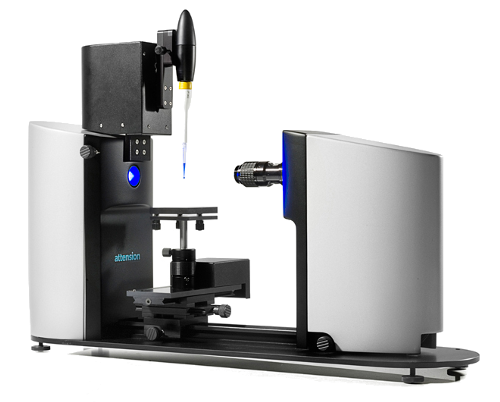
Biolin Attension Tensiometer
All modes of surface tension measurement, including surface and advancing contact angle, pendant drop, and inverted drop configurations. Equipped with a high-speed camera, auto-calculation tools, and an auto-pipette.
Fifteen instruments spanning physical testing, spectroscopy, and imaging are available on a fee-for-use basis. Additional equipment may be available on a case-by-case basis.
All modes of surface tension measurement, including surface and advancing contact angle, pendant drop, and inverted drop configurations. Equipped with a high-speed camera, auto-calculation tools, and an auto-pipette.
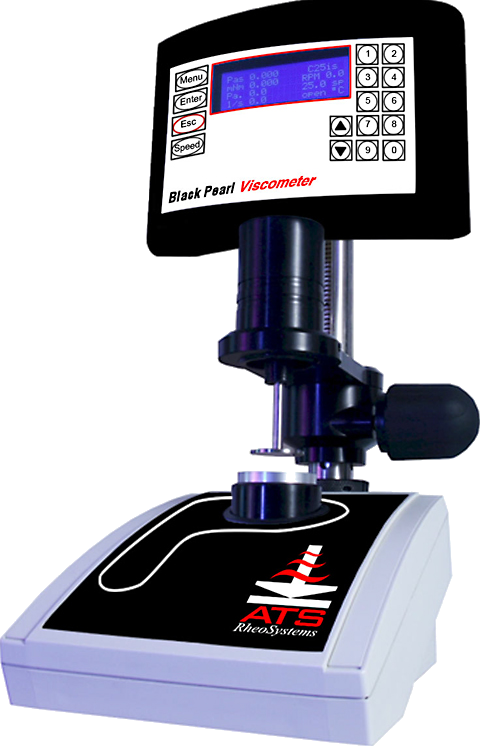
Viscosity measurements in bob-and-cup, cone-and-plate, and parallel plate configurations with Peltier heating and cooling across a 1–90°C range.
Environmental dynamic mechanical analysis with strain- and stress-controlled sinusoidal loading. Atmospheric testing from 25–600°C, submersion testing from -5 to 80°C, and liquid-nitrogen cooling to -190°C. Maximum load 10 N.
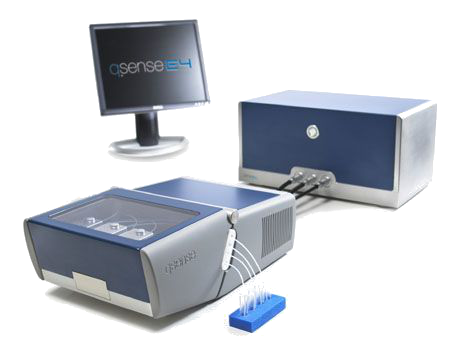
Quartz crystal microbalance with dissipation monitoring, providing detailed settlement information for protein adhesion, adsorption, and film growth studies.
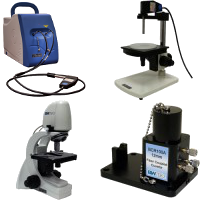
785 nm portable Raman spectrometer covering 200–3300 cm⁻¹. Measures bulk solids, microsamples, and solutions, with in situ kinetics tracking.
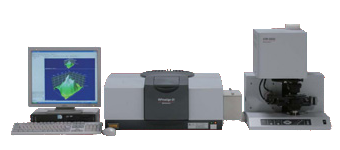
ATR-FTIR spanning 600–4000 cm⁻¹ for liquids, powders, and bulk samples, with an attached AIM 8800 IR microscope.
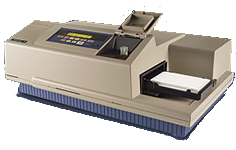
High-throughput microplate reader supporting UV-Vis absorbance, fluorescence intensity, time-resolved fluorescence, fluorescence anisotropy, and luminescence.
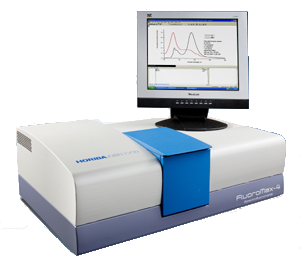
Excitation and emission from 250–850 nm with auto-polarizers for fluorescence anisotropy and kinetic studies, and Origin-based data fitting software.
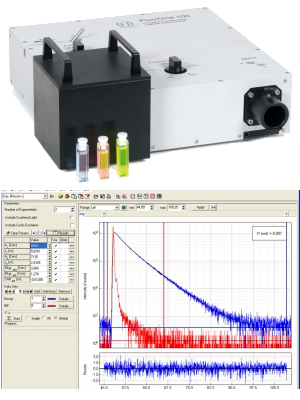
Time-correlated single photon counting (TCSPC) fluorescence lifetime spectrometer. Pulsed diode (∼90 ps) and nanosecond LED (∼350 ps) excitation from 390–640 nm at 2.5–40 MHz, with emission/excitation polarizers for anisotropy decay.
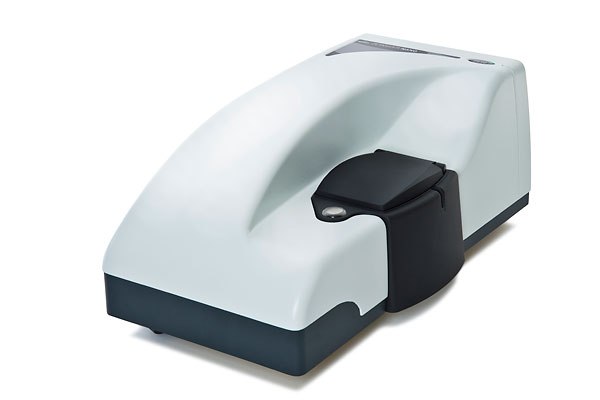
Dynamic light scattering (photon correlation spectroscopy) for particle sizing and electrophoretic light scattering for zeta potential, measured via laser intensity fluctuation and Doppler shift.
Double-monochromator, double-blazed-grating design covering 200–1100 nm (UV, visible, near-IR) with ultra-low stray light for liquid and solid samples.
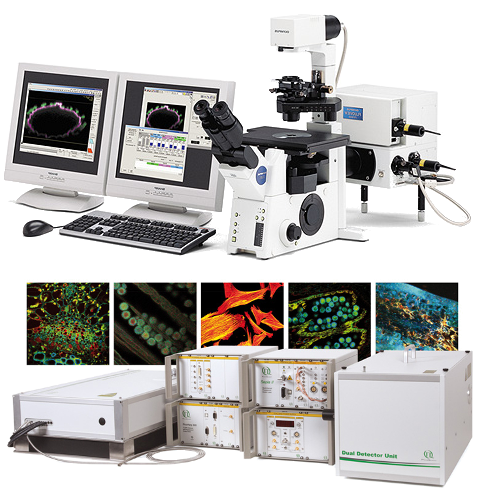
Confocal system with PicoQuant TCSPC, excitation at 405, 454, 488, 515, 543, and 635 nm. Full spectral imaging with routine single-pass three-channel capability, two monochromator-based detectors, and one filter-based detector. Supports fluorescence lifetime imaging microscopy (FLIM) and two-color FLIM or anisotropy decay imaging.
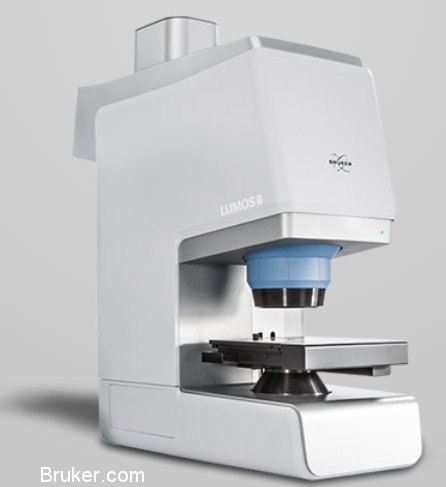
Spatially resolved spectral imaging from 5,000–750 cm⁻¹ in transmission, reflectance, and ATR modes. Single-element MCT and 32×32 focal-plane array (FPA) detectors; 5 µm spatial resolution (1.25 µm in ATR mode) at 8× magnification. Supports hyperspectral chemical mapping, including microplastic characterization.
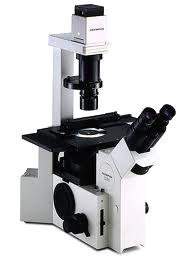
Transmission, bright field, phase contrast, polarization contrast, and fluorescence imaging modes. Excitation 350–650 nm, collection 380–700 nm, with a cooled high-sensitivity CCD detector and a library of filter/dichroic optics for custom filter cube combinations.
Combines high-sensitivity bioluminescence and fluorescence imaging with high-resolution digital X-ray for anatomical localization of molecular and cellular biomarkers in vivo. The system includes magnified X-ray, automated multimodal protocols, a heated sample shelf, gas anesthesia, and 360-degree animal rotation.